What Is A Content Delivery Network (CDN) & Why You Need It
- CSS
- JS
- Photo and Video Files (PNG, JPEG, GIF)
What Is A CDN?
In easy to understand terms, a CDN does three things:- Takes copies of your static files.
- Downloads them onto their servers.
- Serves them to your users.
How Does This Help Me?
If you are building a website that is hosted in Houston, Texas but has visitors in Manhatten, New York they are going to experience a slower load time than your audience in Houston. This is because there is an increased latency between them and your server because they are physically farther away from the server. Now if you have a CDN, your resources will be served from the nearest server to your users. If the company you are working with has a server in New York, then users in that region will have considerably faster load time. This is because the signal does not have to travel all the way to Texas and then back to New York for those images. The only thing it needs to wait on normally is the actual server response time when it comes to serving the HTML (and to do backend processing such as serving news feeds, and other unique content). So basically it makes your site faster!What Type Of Website Needs This?
If your website is a blank hello.txt file on the internet, there is very little need for this kind of application. A CDN would still serve this application, but there is very little value from a business perspective. However, if you are using a CMS such as Drupal, or WordPress where you have lots of content serving to a lot of users globally, then you certainly need a CDN. Even if you are a local business that is solely focused on the U.K, often times a CDN will have a faster server than you. Therefore, it is worth investing in one (even one that only costs a few bucks per month) to reduce the load time of these assets.Who Should I Use?
This is a tough question as it depends on a few things such as:- Your Application.
- What are the Restrictions?
- Integration of the CDN to get the most performance out of it.

Scott Hartley
Founder & CEO, Sert Media
Founder and CEO of Sert Media, a Nashville-based digital marketing agency. Scott has spent over 15 years helping businesses grow through SEO, web performance optimization, and strategic digital marketing. His deep expertise in WordPress development, site speed, and technical SEO has guided hundreds of brands toward measurable results. When he's not auditing Core Web Vitals or refining campaign strategies, he's writing about the tools, techniques, and trends shaping the modern web.
Related Articles
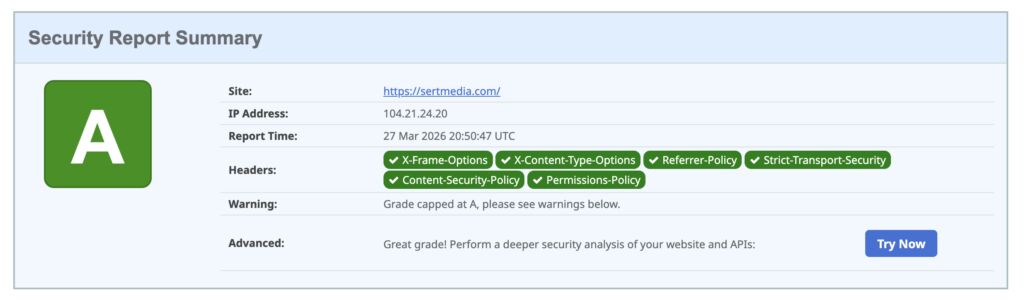
How to Add Security Headers to WordPress Using Cloudflare Transform Rules
If you've ever run your WordPress site through securityheaders.com and gotten a D or F…

Use This Cloudflare Rule To Reduce Plugin Hack Attempts
Cloudflare Firewall Rules give you a lot of flexibility in further protecting your website. Here…
Set Up Cloudflare's Automatic Platform Optimization Feature
Automatic Platform Optimization (APO) is a new feature from Cloudflare that allows you to cache…